East students share insights on African American culture with pop-up museum
February 11, 2026
East High School students flexed their research muscles this winter with a series of strong presentations to classmates during Black History Month.
Members of the Advanced Placement African American Studies class offered insights to dozens of fellow Spartans during a pop-up museum event. Stories about the groundbreaking scientist Alice Ball, the impact of filmmakers in Black society and African American roles in World War II came to life in the school’s media center. Students stood next to posters, dioramas and exhibits and spoke about their subjects to many interested onlookers.
Zoe and Jerrica presented near each other on one end of the library. Zoe created a “Lens of Liberation” poster that featured black-and-white photographs of famous African Americans Sojourner Truth, Harriet Tubman and Frederick Douglass. Jerrica explored the idea of double consciousness, which happens when someone feels like they have to conform to society at large while continuing to celebrate their own culture. She highlighted this topic by looking at contemporary American food and traditional African cuisine.

Both Spartans have enjoyed discovering detailed information about African American legacies in the class. They said the pop-up museum was a good way to showcase their work to friends, teachers and Lincoln Public Schools administrators who attended.
“This project has really made me dive deeper into what it means to have culture and history,” Zoe said. “It’s important to keep the faces and pictures and memories alive, because they will always live on as a part of history.”
“African Americans faced such discrimination and hardships throughout history,” Jerrica said. “I know we touch on it in World History and we touch on it in U.S. History, but this is the first class where I’ve felt I can just focus on them and learn about their culture and what they’ve experienced. I love learning about a different culture than mine.”
AP African American Studies teacher Michaela Schleicher said she was pleased with the enthusiastic way students like Zoe and Jerrica embraced their projects. Schleicher, who also chairs East’s social studies department, is leading a two-semester course that covers everything from early African kingdoms to contemporary contributions in science, writing and fine arts.
“This project transitioned them from passive learners to active docents,” Schleicher said. “They didn’t just memorize history, they learned how to provide context, explain perspective and advocate for why these ‘untold stories’ are essential to our collective understanding.”


AP African American Studies is currently available for high school students at Lincoln High, East, Northwest and Southwest. LPS began offering the course in 2024-25 after it was piloted nationally for several years.
LPS K-12 Social Studies Curriculum Specialist Jaci Grimes said the new class aligns well with districtwide goals found in the 2024-29 LPS Strategic Plan. It also dovetails with the social studies department’s mission of engaging all students with the knowledge and skills necessary to be informed and active citizens.
“It offers another opportunity for students to earn college credit through either dual enrollment or the AP national exam,” Grimes said. “In many cases, students enrolled in the course have already successfully completed our AP World History and AP United States History courses, and are interested in expanding the narrative to learn more about the history of our nation and our world.”
Schleicher gave students freedom to investigate many aspects of Black culture for the pop-up museum. Chandlar focused on cinematic legends like Senegalese filmmaker Annette Mbaye d’Erneville, and Gracie explored the changing societal expectations and public presence of African Americans on basketball courts. Britton studied how African Americans helped the Allies win World War II before becoming pillars of the Civil Rights Era.
Grimes said it was important for students to investigate and create historical narratives on their own. She said becoming skilled researchers, analysts and storytellers would bear many positive fruits in their lives.
“It’s really cool to see all of the content that they’ve researched, and they’re also learning skills that are going to be transferable into a variety of settings,” Grimes said. “It will help them be engaged in their communities and be comfortable speaking publicly and having face-to-face conversations with people. Not only the content, but the skills that they’re learning through this process are really powerful.”
Chandlar and Gracie said they had already experienced many of those outcomes. Gracie included pictures, videos and basketball cards into her project, which gave visitors additional ways to process and retain her information. Chandlar smiled as she held an in-depth discussion with Grimes about her topic shortly before speaking to a group of younger Spartans.
“It’s a little nerve-wracking, but I think it’s a good opportunity to present about something that I care about,” Chandlar said. “I think it’s nice to talk to people about this, because I think everybody should know who these filmmakers are.”
“I’ve enjoyed being able to talk to people today,” Gracie said. “There are so many parts of history that are left out, so it’s been fun to tell people about some of that. I’ve really liked doing this.”


The pop-up museum also benefited Spartans who are not taking the course. Multiple students expressed interest about Jerrica’s project when they approached her table. They left with a clearer understanding of how she uncovered historical facts and philosophical perspectives through her research.
“I like the idea that I’m telling people more about African American history and just African history in general,” Jerrica said. “I personally didn’t know a lot about African American culture before this class, so being able to tell more people and educate more people about it feels really good.”
The Spartans will dive into the remaining century of African American history during the next several months. Schleicher said the pop-up museum would serve them well in all of their future pursuits.
“The interest sparked by these projects will serve as a touchstone for the rest of the semester,” Schleicher said. “This experience didn’t just teach content; it built the research muscles they need to succeed. Whether they are tackling AP essays or their final research defense, they will be drawing on the analytical skills they developed here.”
Discover how the LPS Social Studies Blueprint is helping students become informed members of their community, nation and world.
Do you have a story idea? Share it with the LPS Communications Team by filling out this form!
Published: February 11, 2026, Updated: February 11, 2026
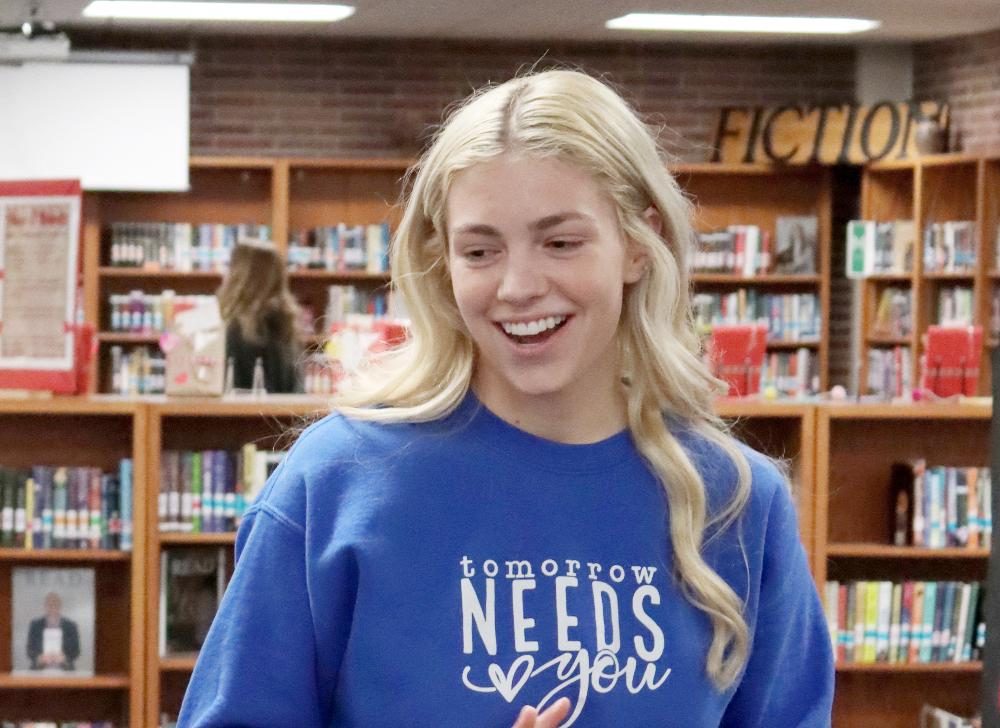
East High School senior Gracie smiles as she speaks about her AP African American Studies class project in the media center. She and other Spartans presented their research projects during a pop-up museum event.
